
Cart
Your shopping cart doesn't have any products yet!

⸻
How Distributed Trade Structures Enhance Flexibility in Global Footwear Wholesale
In today’s global footwear wholesale landscape, operational stability is no longer determined solely by production capacity or logistics efficiency.
As highlighted in evolving global trade patterns, fragmentation across regions, regulations, and markets has introduced new structural challenges for wholesale businesses.
In this environment, relying on a single operational structure can limit flexibility and increase exposure to disruption.
To adapt, many wholesale systems are shifting toward distributed trade structures.
⸻
The Limitations of Centralized Trade Structures
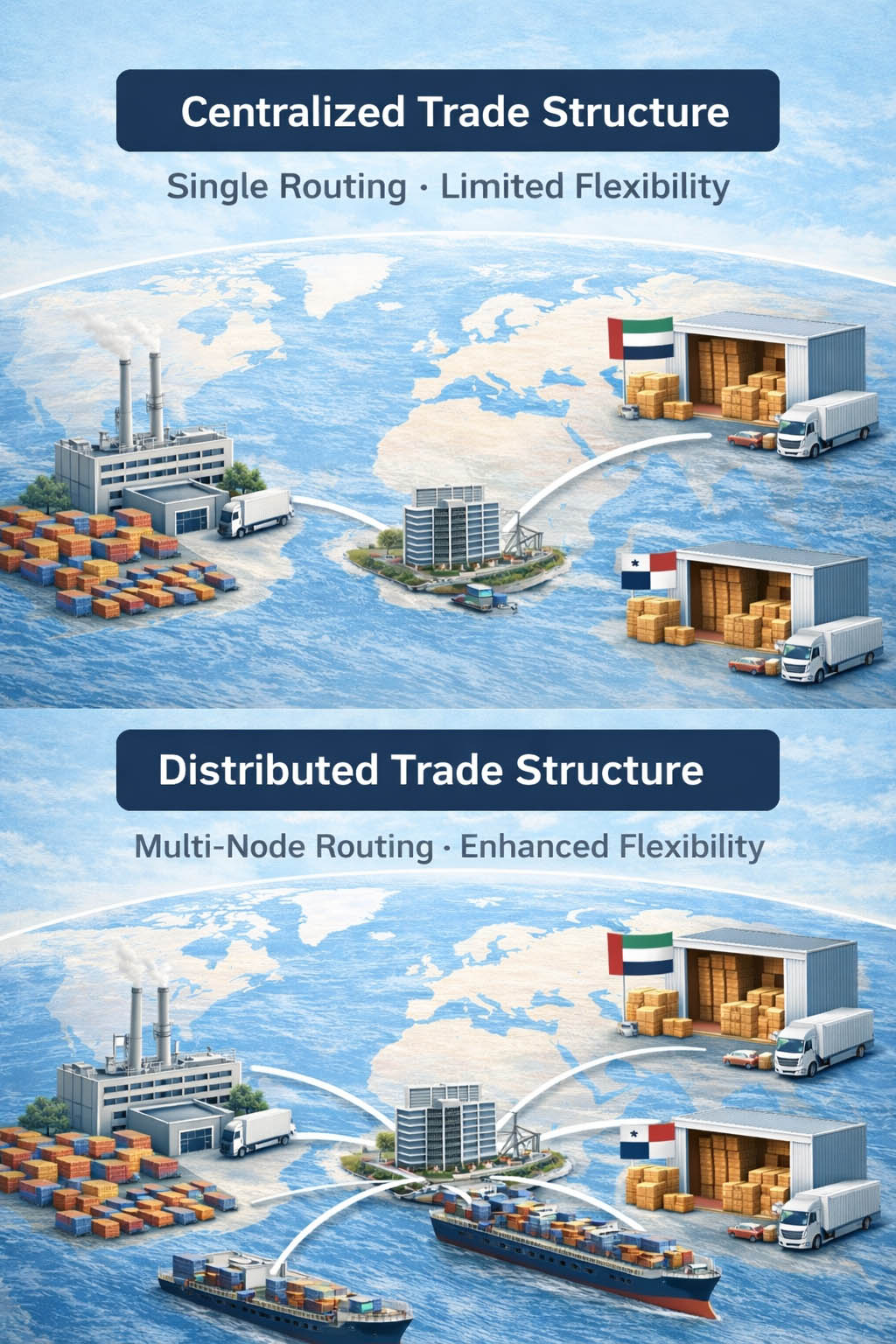
Traditional wholesale models often rely on a centralized structure, where sourcing, trading, and distribution are managed through a single entity or jurisdiction.
While this model can be efficient in stable environments, it presents several limitations in fragmented global trade conditions:
• exposure to regulatory changes
• limited routing and shipping flexibility
• dependency on a single financial and legal framework
• vulnerability to regional disruptions
As global trade becomes more segmented, these constraints can directly impact supply continuity.
⸻
What Are Distributed Trade Structures
Distributed trade structures refer to an operational model where different functions are organized across multiple entities or regions.
Rather than concentrating all operations in one location, responsibilities are separated to improve flexibility and resilience.
A typical distributed structure in footwear wholesale may include:
• production coordination in manufacturing regions
• trading entities in international hubs
• diversified payment and settlement channels
• multi-destination logistics routing
This structure allows businesses to adapt to changing market conditions without disrupting the entire system.
⸻
How Distributed Structures Improve Flexibility
One of the primary advantages of distributed trade structures is operational flexibility.
By separating key functions, wholesale businesses can:
• adjust shipping routes based on regional conditions
• optimize customs clearance through alternative jurisdictions
• manage payments across different financial systems
• respond more efficiently to market-specific demand
This flexibility is particularly valuable in footwear wholesale, where seasonal demand and regional preferences require adaptive supply strategies.
⸻
Supporting Stable Wholesale Distribution
Distributed structures also contribute to more stable wholesale distribution systems.
Instead of relying on a single operational pathway, businesses can maintain multiple coordinated routes.
This reduces the risk of:
• shipment delays due to localized disruptions
• inventory gaps caused by routing limitations
• operational bottlenecks in peak seasons
Over time, distributed systems create a more balanced and predictable supply flow for retail partners.
⸻
Distributed Structures in a Fragmented Trade Environment
In a fragmented global trade environment, flexibility becomes a core operational capability.
Wholesale systems that can adapt to shifting regulations, market conditions, and logistics constraints are more likely to maintain long-term stability.
Distributed trade structures provide this adaptability by design.
Rather than reacting to disruptions, they allow businesses to reconfigure operations dynamically.
⸻
Conclusion
Distributed trade structures are not simply an operational adjustment — they represent a strategic evolution in global footwear wholesale.
By enabling flexibility, reducing risk concentration, and supporting stable distribution, they allow wholesale systems to operate effectively in an increasingly complex global environment.
In modern trade networks, structure defines resilience.
⸻