Beneficios Comerciales Exclusivos hasta el Lunes

Cart

Your shopping cart doesn't have any products yet!

Cómo el Comercio Mayorista Estructurado Reduce el Riesgo en el Comercio Minorista

Cómo el Comercio Mayorista Estructurado Reduce el Riesgo en el Comercio Minorista

Mar 08, 2026


Cómo el Comercio Mayorista Estructurado Reduce el Riesgo en el Comercio Minorista


Las asociaciones mayoristas en la industria de la moda y del calzado suelen percibirse como transacciones simples: los minoristas realizan pedidos, los proveedores producen los productos y los envíos se despachan.


En realidad, las relaciones mayoristas sostenibles dependen de una estructura operativa mucho más profunda.


Sin una coordinación estructurada, las cadenas de suministro mayoristas pueden volverse rápidamente inestables, lo que provoca inventarios inconsistentes, retrasos en los envíos y una disponibilidad impredecible en el comercio minorista.


Para los minoristas, esta inestabilidad se traduce directamente en riesgo.


Los Riesgos Ocultos del Comercio Mayorista No Estructurado


Los negocios minoristas dependen de un suministro predecible.


Sin embargo, muchos sistemas mayoristas operan con ciclos de producción reactivos. Los pedidos se aceptan sin una planificación adecuada de la capacidad y los calendarios de fabricación se ajustan continuamente sobre la marcha.


Este enfoque suele generar varios problemas operativos:


• Congestión de producción durante las temporadas de mayor demanda

• Inconsistencias en el control de calidad

• Retrasos en los calendarios de despacho

• Logística internacional descoordinada


Cuando estos problemas ocurren, los minoristas se ven obligados a asumir las consecuencias.


Las estanterías quedan vacías, la demanda de los clientes no puede satisfacerse y el impulso de las ventas se pierde.


El Papel de las Cadenas de Suministro Estructuradas
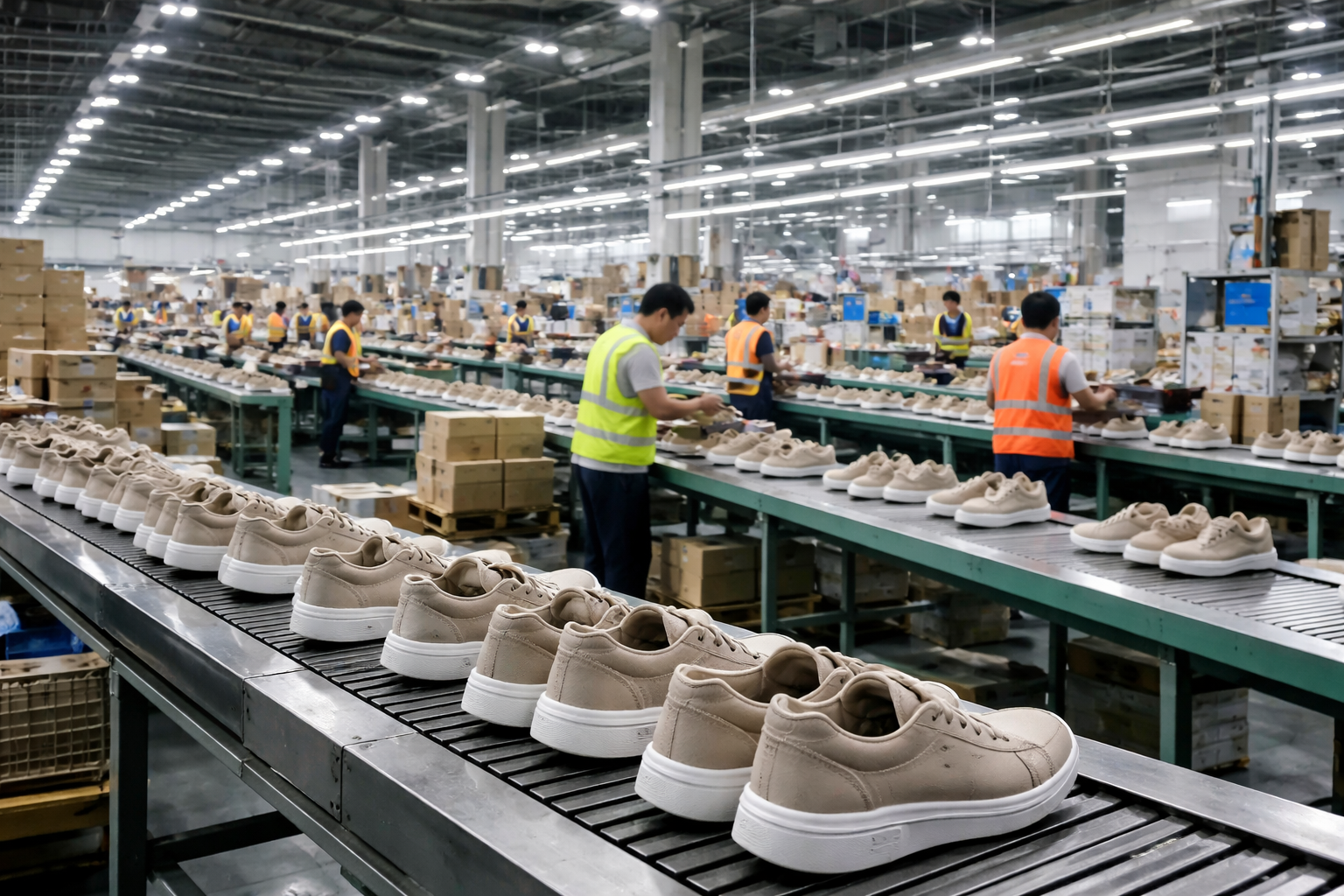
footwear-manufacturing-capacity.PNG

Un modelo mayorista estructurado aborda estos desafíos introduciendo disciplina operativa en toda la cadena de suministro.


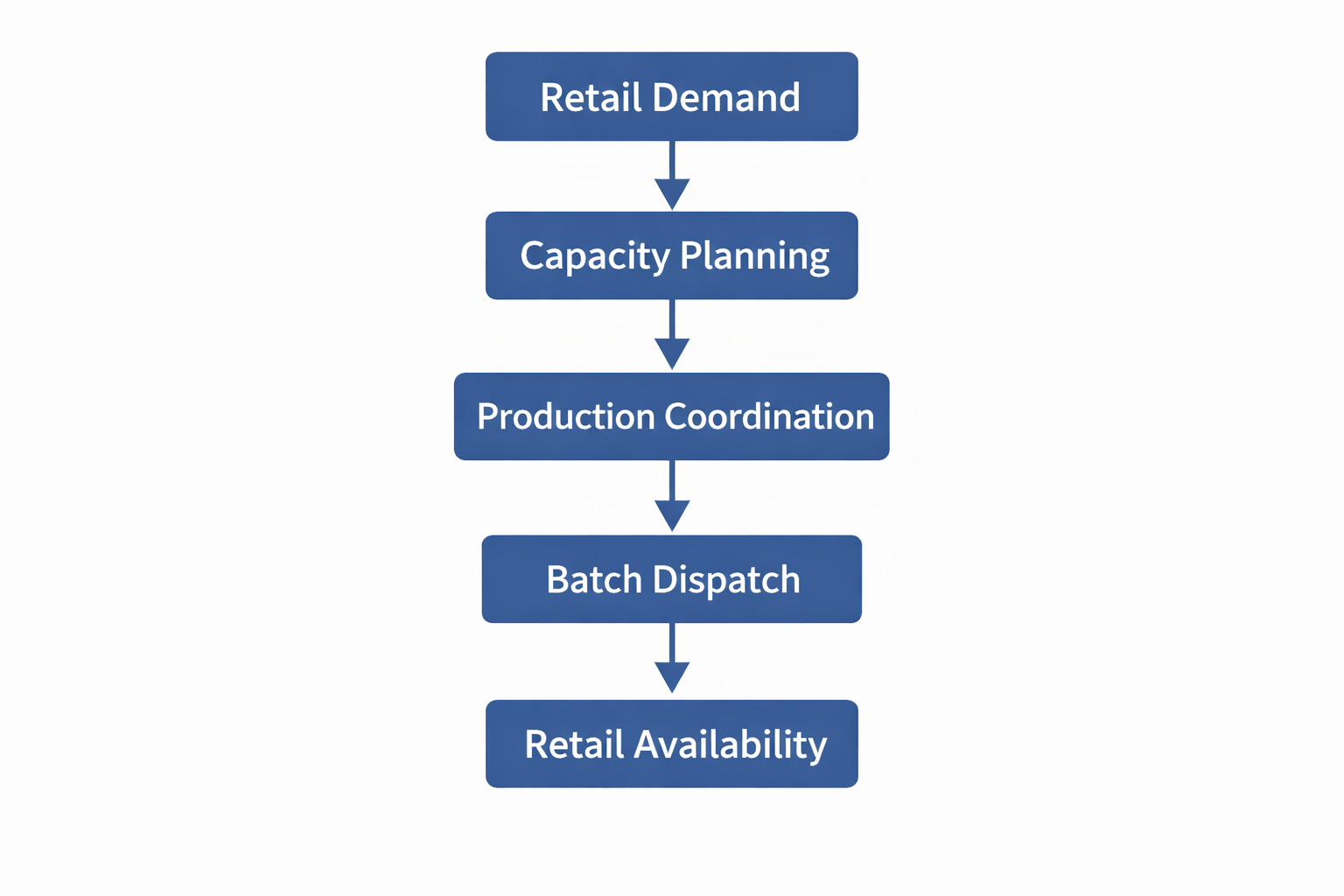
En lugar de reaccionar a los pedidos a medida que llegan, la capacidad de producción se planifica con antelación.


En lugar de enviar mercancías de forma aleatoria, los envíos se coordinan en lotes controlados.


En lugar de depender de redes informales de abastecimiento, se establecen procesos de verificación de proveedores y procedimientos de control de calidad.


Estos elementos estructurales permiten que las operaciones mayoristas mantengan estabilidad incluso cuando la demanda fluctúa.


Planificación de Capacidad y Alineación de la Producción


Uno de los componentes más importantes del comercio mayorista estructurado es la asignación de capacidad.


Los recursos de fabricación son limitados. Sin una planificación adecuada, el exceso de compromisos puede alterar rápidamente el calendario de producción.


Al asignar con anticipación los espacios de producción y coordinar los calendarios de fabricación con los ciclos de demanda del comercio minorista, los proveedores pueden evitar los cuellos de botella que a menudo afectan a los grandes pedidos mayoristas.


Esto garantiza que los minoristas reciban una disponibilidad de productos constante en lugar de picos de suministro impredecibles.


Despacho por Lotes y Coordinación Logística
batch-dispatch-logistics-system.PNG

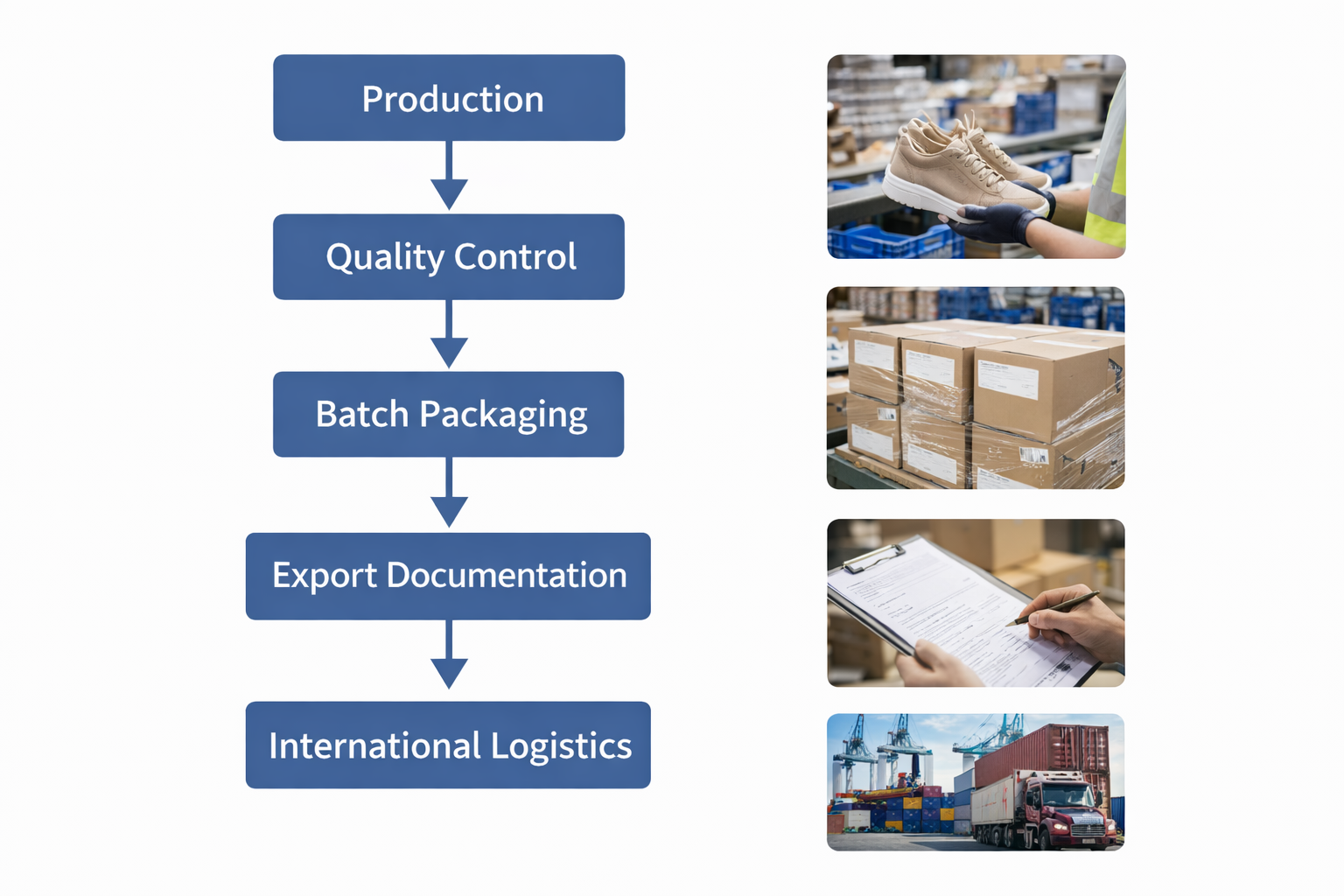
Otro elemento clave es el cumplimiento basado en lotes.


En lugar de enviar los pedidos de forma individual, los sistemas mayoristas estructurados agrupan los despachos en lotes coordinados.


Este método mejora la eficiencia logística y permite a los exportadores gestionar la documentación, los procedimientos aduaneros y las rutas internacionales de manera más eficaz.


Para los minoristas, esto se traduce en ciclos de reposición previsibles y una gestión de inventario más estable.


Estabilidad a Largo Plazo para los Socios Minoristas


En última instancia, el comercio mayorista estructurado no consiste en aumentar el volumen de pedidos.


Se trata de mantener la consistencia operativa.


Los socios minoristas se benefician de calendarios de suministro previsibles, estándares de producción fiables y procesos de distribución coordinados.


Con el tiempo, esta estabilidad fortalece todo el ecosistema minorista.


Los proveedores obtienen socios de confianza y los minoristas consiguen cadenas de suministro más fiables.


En los mercados globales de calzado, donde los patrones de demanda cambian rápidamente, la estructura es lo que permite que las operaciones mayoristas crezcan sin sacrificar la fiabilidad.


Para los minoristas que buscan estabilidad a largo plazo, los sistemas de suministro estructurados no solo son beneficiosos: son esenciales.


We use cookie to improve your online experience. By continuing to browse this website, you agree to our use of cookie.

Cookies

Please read our Terms and Conditions and this Policy before accessing or using our Services. If you cannot agree with this Policy or the Terms and Conditions, please do not access or use our Services. If you are located in a jurisdiction outside the European Economic Area, by using our Services, you accept the Terms and Conditions and accept our privacy practices described in this Policy.
We may modify this Policy at any time, without prior notice, and changes may apply to any Personal Information we already hold about you, as well as any new Personal Information collected after the Policy is modified. If we make changes, we will notify you by revising the date at the top of this Policy. We will provide you with advanced notice if we make any material changes to how we collect, use or disclose your Personal Information that impact your rights under this Policy. If you are located in a jurisdiction other than the European Economic Area, the United Kingdom or Switzerland (collectively “European Countries”), your continued access or use of our Services after receiving the notice of changes, constitutes your acknowledgement that you accept the updated Policy. In addition, we may provide you with real time disclosures or additional information about the Personal Information handling practices of specific parts of our Services. Such notices may supplement this Policy or provide you with additional choices about how we process your Personal Information.


Cookies

Cookies are small text files stored on your device when you access most Websites on the internet or open certain emails. Among other things, Cookies allow a Website to recognize your device and remember if you've been to the Website before. Examples of information collected by Cookies include your browser type and the address of the Website from which you arrived at our Website as well as IP address and clickstream behavior (that is the pages you view and the links you click).We use the term cookie to refer to Cookies and technologies that perform a similar function to Cookies (e.g., tags, pixels, web beacons, etc.). Cookies can be read by the originating Website on each subsequent visit and by any other Website that recognizes the cookie. The Website uses Cookies in order to make the Website easier to use, to support a better user experience, including the provision of information and functionality to you, as well as to provide us with information about how the Website is used so that we can make sure it is as up to date, relevant, and error free as we can. Cookies on the Website We use Cookies to personalize your experience when you visit the Site, uniquely identify your computer for security purposes, and enable us and our third-party service providers to serve ads on our behalf across the internet.

We classify Cookies in the following categories:
 ●  Strictly Necessary Cookies
 ●  Performance Cookies
 ●  Functional Cookies
 ●  Targeting Cookies


Cookie List
A cookie is a small piece of data (text file) that a website – when visited by a user – asks your browser to store on your device in order to remember information about you, such as your language preference or login information. Those cookies are set by us and called first-party cookies. We also use third-party cookies – which are cookies from a domain different than the domain of the website you are visiting – for our advertising and marketing efforts. More specifically, we use cookies and other tracking technologies for the following purposes:

Strictly Necessary Cookies
These cookies are necessary for the website to function and cannot be switched off in our systems. They are usually only set in response to actions made by you which amount to a request for services, such as setting your privacy preferences, logging in or filling in forms. You can set your browser to block or alert you about these cookies, but some parts of the site will not then work. These cookies do not store any personally identifiable information.

Functional Cookies
These cookies enable the website to provide enhanced functionality and personalisation. They may be set by us or by third party providers whose services we have added to our pages. If you do not allow these cookies then some or all of these services may not function properly.

Performance Cookies
These cookies allow us to count visits and traffic sources so we can measure and improve the performance of our site. They help us to know which pages are the most and least popular and see how visitors move around the site. All information these cookies collect is aggregated and therefore anonymous. If you do not allow these cookies we will not know when you have visited our site, and will not be able to monitor its performance.

Targeting Cookies
These cookies may be set through our site by our advertising partners. They may be used by those companies to build a profile of your interests and show you relevant adverts on other sites. They do not store directly personal information, but are based on uniquely identifying your browser and internet device. If you do not allow these cookies, you will experience less targeted advertising.

How To Turn Off Cookies
You can choose to restrict or block Cookies through your browser settings at any time. Please note that certain Cookies may be set as soon as you visit the Website, but you can remove them using your browser settings. However, please be aware that restricting or blocking Cookies set on the Website may impact the functionality or performance of the Website or prevent you from using certain services provided through the Website. It will also affect our ability to update the Website to cater for user preferences and improve performance. Cookies within Mobile Applications

We only use Strictly Necessary Cookies on our mobile applications. These Cookies are critical to the functionality of our applications, so if you block or delete these Cookies you may not be able to use the application. These Cookies are not shared with any other application on your mobile device. We never use the Cookies from the mobile application to store personal information about you.

If you have questions or concerns regarding any information in this Privacy Policy, please contact us by email at . You can also contact us via our customer service at our Site.