
Quote List
No Products Selected Yet
⸻
How Structured Wholesale Reduces Retail Risk
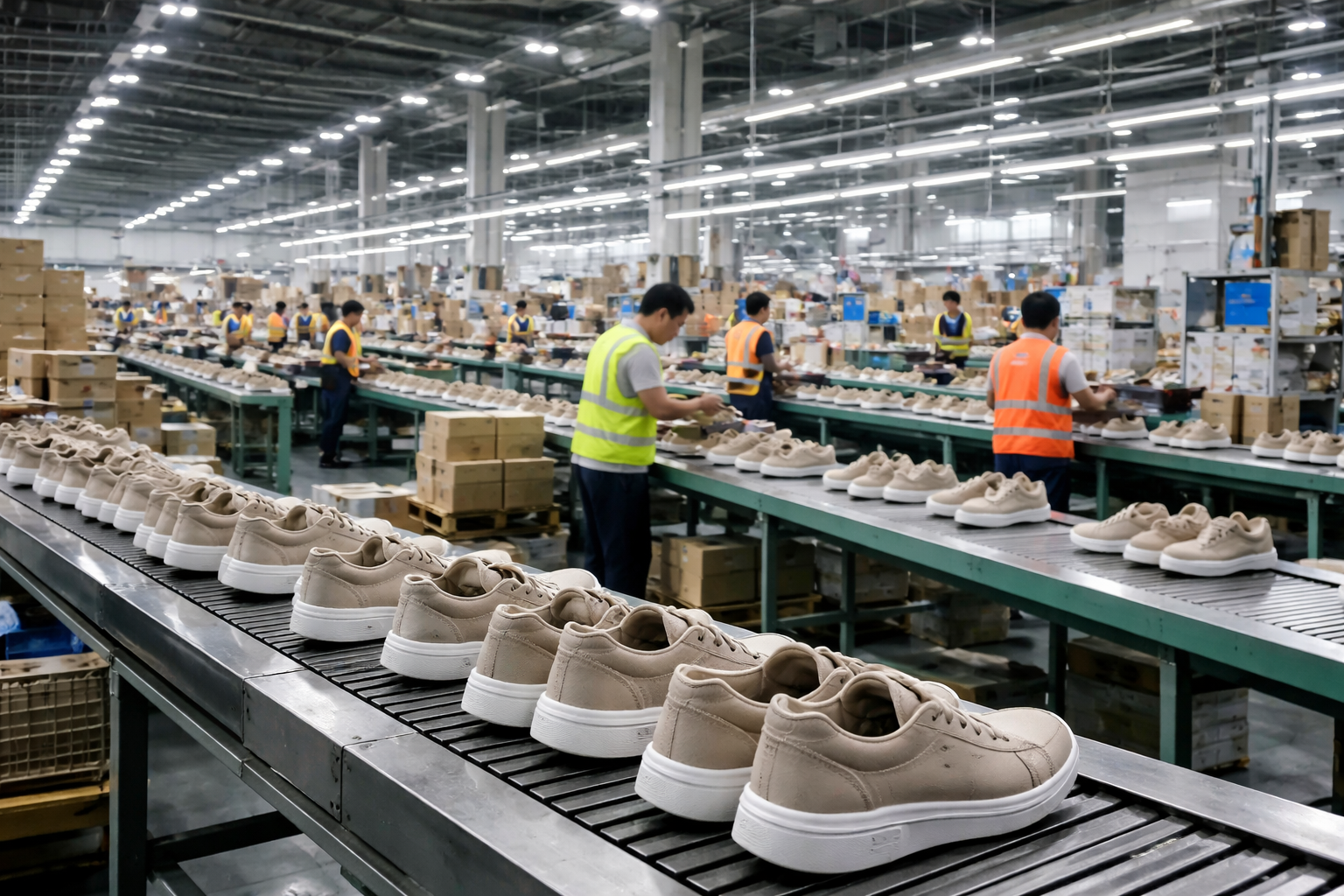
Wholesale partnerships in fashion and footwear are often perceived as simple transactions: retailers place orders, suppliers produce goods, and shipments are dispatched.
In reality, sustainable wholesale relationships rely on a much deeper operational structure.
Without structured coordination, wholesale supply chains can quickly become unstable — leading to inconsistent inventory, delayed shipments, and unpredictable retail availability.
For retailers, this instability directly translates into risk.
The Hidden Risks Behind Unstructured Wholesale
Retail businesses depend on predictable supply.
However, many wholesale systems operate on reactive production cycles. Orders are accepted without proper capacity planning, and manufacturing timelines are adjusted on the fly.
This approach often creates several operational problems:
• Production congestion during peak seasons
• Quality control inconsistencies
• Delayed dispatch schedules
• Uncoordinated international logistics
When these issues occur, retailers are forced to absorb the consequences.
Shelves remain empty, customer demand cannot be met, and retail momentum is lost.
The Role of Structured Supply Chains
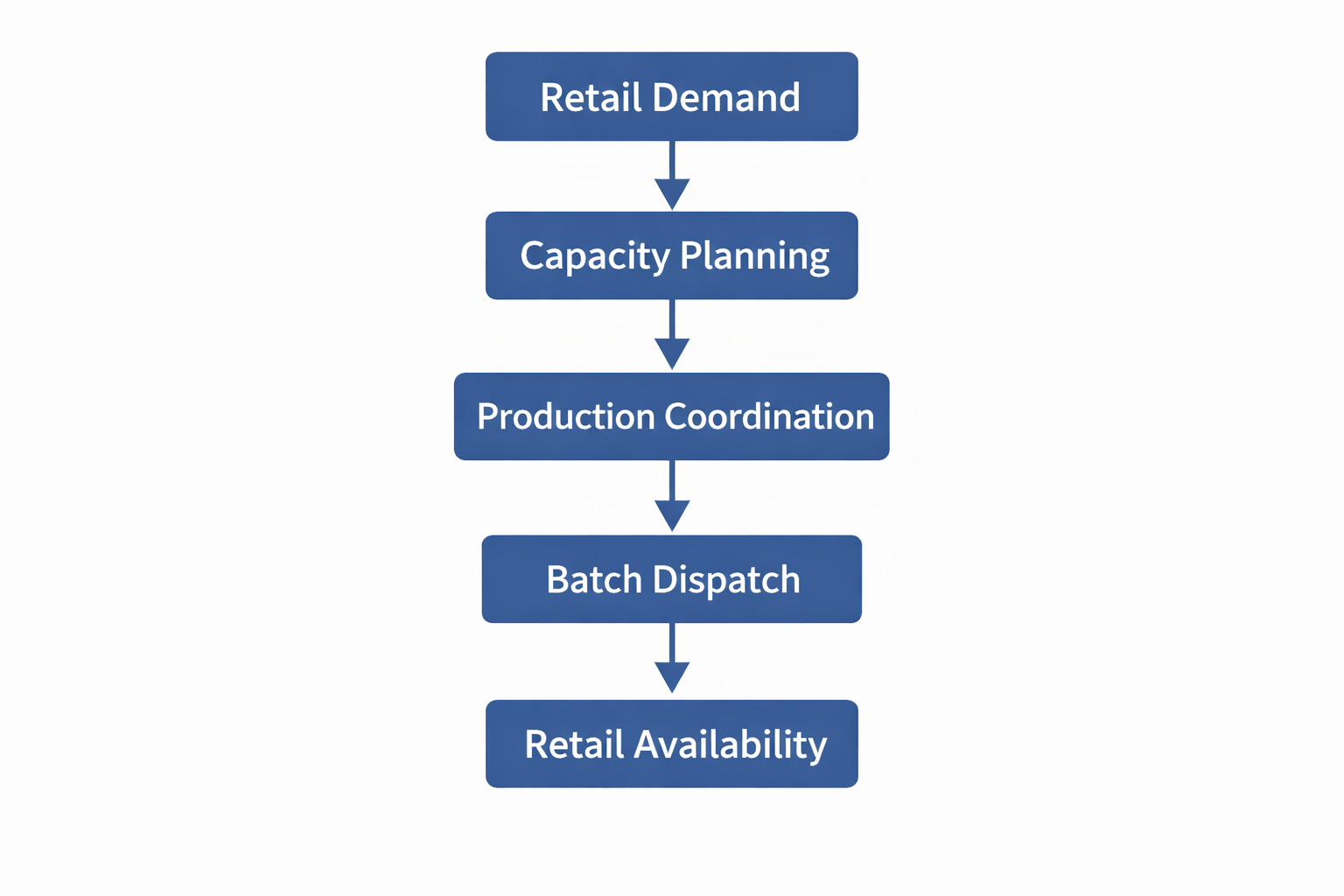
A structured wholesale framework addresses these challenges by introducing operational discipline across the entire supply chain.
Instead of reacting to orders as they arrive, production capacity is planned in advance.
Instead of dispatching goods randomly, shipments are coordinated in controlled batches.
Instead of relying on informal sourcing networks, supplier verification and quality control procedures are established.
These structural elements allow wholesale operations to maintain stability even when demand fluctuates.
Capacity Planning and Production Alignment
One of the most important components of structured wholesale is capacity allocation.
Manufacturing resources are limited. Without proper planning, overcommitment can quickly disrupt the production schedule.
By allocating manufacturing slots in advance and coordinating production timelines with retail demand cycles, suppliers can avoid the bottlenecks that often plague large wholesale orders.
This ensures that retailers receive consistent product availability rather than unpredictable supply bursts.
Batch-Based Dispatch and Logistics Coordination
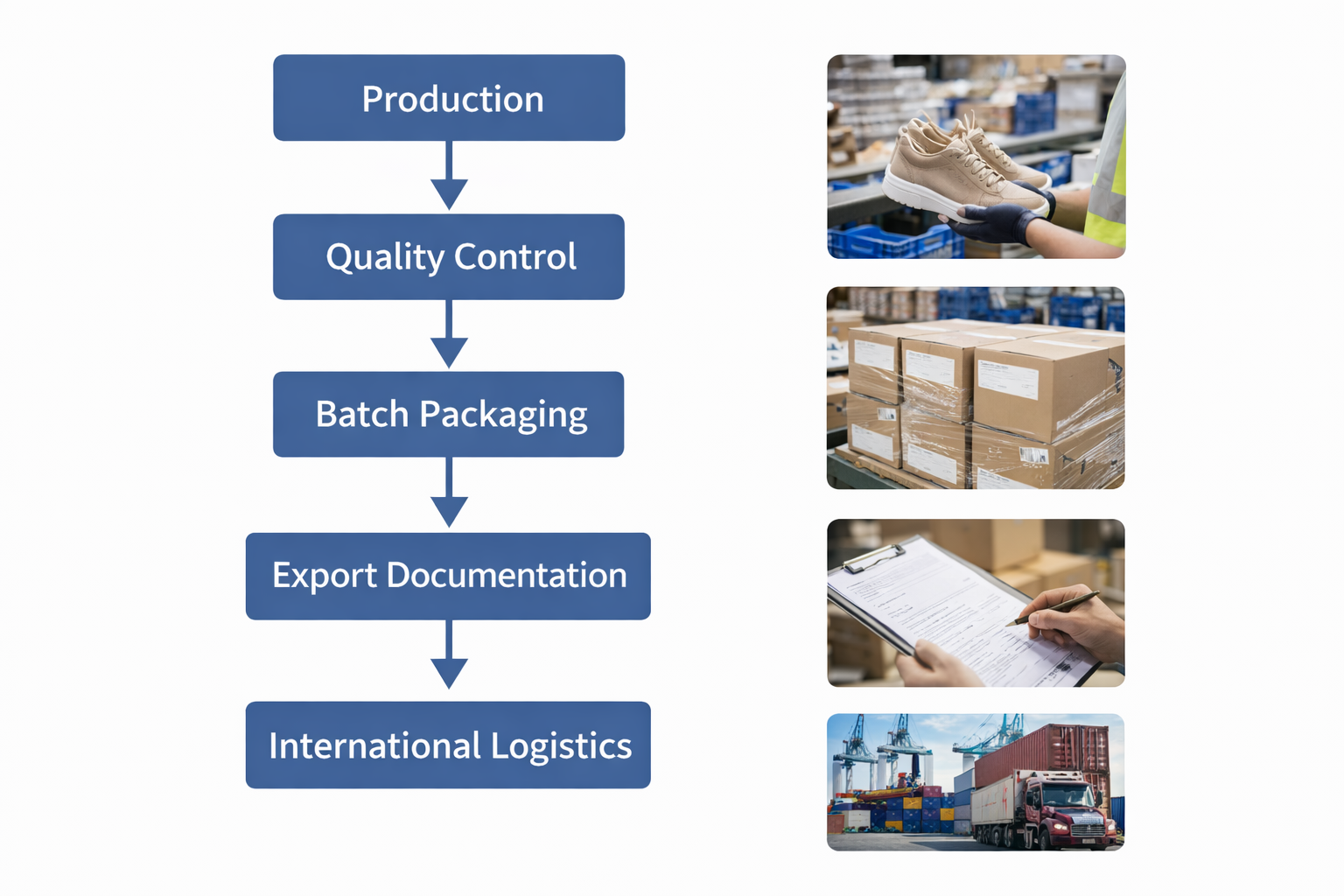
Another key element is batch-based fulfillment.
Instead of shipping orders individually, structured wholesale systems group dispatches into coordinated batches.
This method improves logistics efficiency while allowing exporters to manage documentation, customs procedures, and cross-border routing more effectively.
For retailers, this translates into predictable restocking cycles and smoother inventory management.
Long-Term Stability for Retail Partners
Ultimately, structured wholesale is not about increasing order volume.
It is about maintaining operational consistency.
Retail partners benefit from predictable supply schedules, reliable production standards, and coordinated distribution processes.
Over time, this stability strengthens the retail ecosystem.
Suppliers gain trusted partners, and retailers gain dependable supply chains.
In global footwear markets where demand patterns shift rapidly, structure is what allows wholesale operations to scale without sacrificing reliability.
For retailers seeking long-term stability, structured supply systems are not just beneficial — they are essential.
⸻